
Last Updated: August 2026
Novak Djokovic vs Roger Federer became one of the defining rivalries of modern men’s tennis.
They played 50 official tour-level matches across 14 years.
The final head-to-head record:
Novak Djokovic 27–23 Roger Federer
Only four victories separated them.
But the rivalry was much bigger than 27–23.
Federer was already the dominant player in men’s tennis when an 18-year-old Djokovic first faced him in Monte-Carlo in 2006.
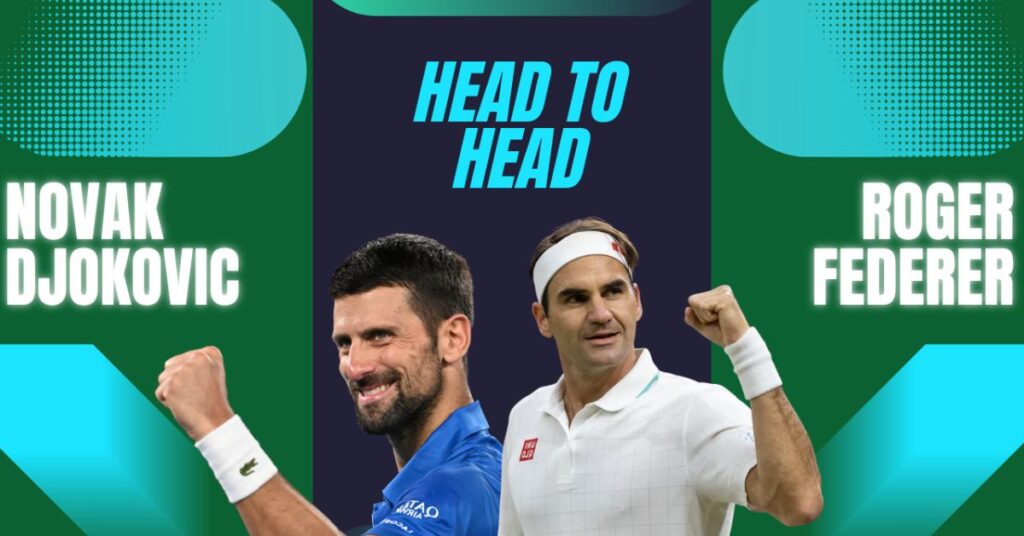
Over the years that followed, Djokovic transformed from a young challenger into one of Federer’s greatest rivals—and eventually into the player who finished ahead of him in several of tennis’s biggest statistical categories.
They met repeatedly at the Australian Open.
They played famous US Open semifinals.
They contested three Wimbledon finals.
They battled at the ATP Finals.
They competed for the World No. 1 ranking.
And in perhaps their most famous encounter, Federer held two championship points before Djokovic somehow survived to win the 2019 Wimbledon final.
Their rivalry became a clash not only between two great players, but between two different tennis philosophies:
Federer’s first-strike attacking tennis against Djokovic’s return, movement, precision and defensive resilience.
This page examines the complete Djokovic vs Federer rivalry: overall head-to-head record, surfaces, Grand Slam meetings, finals, greatest matches, tactical evolution, career statistics and what the rivalry means in the debate over the greatest tennis player of all time.
For their complete individual career records, visit our Novak Djokovic career profile and Roger Federer career profile.
You can also compare both players in our Greatest Tennis Player of All Time analysis or see where fans currently place them in the Live Tennis GOAT Ranking.
Djokovic vs Federer Head-to-Head: Quick Answer
Novak Djokovic and Roger Federer played 50 official tour-level matches.
Djokovic won 27.
Federer won 23.
Final Djokovic vs Federer Head-to-Head
| Category | Novak Djokovic | Roger Federer |
|---|---|---|
| Overall | 27 | 23 |
| Hard Court | 20 | 18 |
| Clay | 4 | 4 |
| Grass | 3 | 1 |
| Grand Slam Matches | 11 | 6 |
| Grand Slam Finals | 4 | 1 |
| Total Meetings | 50 | 50 |
The overall numbers demonstrate how competitive the rivalry was.
Djokovic finished ahead by only four matches.
Clay was completely even.
The hard-court rivalry remained close despite the large number of meetings.
Djokovic’s clearest advantage came in their later Grand Slam encounters, particularly at Wimbledon.
Djokovic vs Federer Head-to-Head by Surface
The surface breakdown provides important context for the 27–23 overall score.
Djokovic vs Federer on Hard Courts
Djokovic leads 20–18.
Hard courts accounted for the majority of their rivalry.
And despite 38 meetings on the surface, only two victories separated them.
That is remarkable considering how differently they approached hard-court tennis.
Federer looked to shorten points.
His serve created immediate opportunities.
He took the ball early.
He attacked the net more frequently.
Djokovic built his game around an extraordinary return of serve, elite movement, depth from the baseline and the ability to turn defensive positions into neutral or attacking ones.
Their contrasting strengths produced memorable encounters at:
- Australian Open
- US Open
- ATP Finals
- Indian Wells
- Cincinnati
- Paris
- Dubai
- Canada
Across all of them combined:
Djokovic 20
Federer 18
Almost nothing separated them.
Djokovic vs Federer on Clay
4–4.
Their clay-court rivalry finished completely even.
This is an interesting part of the rivalry because clay was neither player’s defining surface.
Federer was an elite clay-court player who won Roland Garros and reached five French Open finals.
Djokovic became a multiple Roland Garros champion and one of the greatest clay-court players of his generation.
When they played each other on the surface:
four wins each.
Their most historically significant clay meeting came at Roland Garros in 2011.
And Federer won it.
Djokovic vs Federer on Grass
Djokovic leads 3–1.
They met four times on grass.
Every meeting took place at Wimbledon.
Most importantly, three of the four were Wimbledon finals.
Djokovic won all three finals:
2014
2015
2019
Federer’s only grass victory against Djokovic came in the 2012 Wimbledon semifinal.
This is one of the most historically significant parts of their rivalry.
Federer is the men’s record eight-time Wimbledon champion.
Yet Djokovic defeated him in three Wimbledon championship matches.
Djokovic vs Federer Grand Slam Head-to-Head
Djokovic and Federer played 17 times at Grand Slam tournaments.
Djokovic led:
11–6.
Grand Slam Head-to-Head by Tournament
| Grand Slam | Djokovic | Federer |
|---|---|---|
| Australian Open | 4 | 1 |
| Roland Garros | 1 | 1 |
| Wimbledon | 3 | 1 |
| US Open | 3 | 3 |
| Total | 11 | 6 |
This tournament-by-tournament breakdown tells an interesting story.
Djokovic controlled Melbourne.
Roland Garros was even.
Djokovic held the Wimbledon advantage.
And the US Open finished perfectly tied.
Djokovic vs Federer at the Australian Open
The Australian Open was Djokovic’s strongest Grand Slam in the rivalry.
He led Federer:
4–1.
Their meetings also illustrate the transition from Federer’s era of dominance to Djokovic’s rise.
2007 Australian Open Fourth Round
Federer defeated Djokovic in straight sets.
At the time, Federer was the established World No. 1 and defending Australian Open champion.
Djokovic was a rapidly improving 19-year-old.
Federer won:
6–2, 7–5, 6–3.
It was their first Grand Slam meeting.
At that point, Federer remained clearly ahead.
One year later, the story changed.
2008 Australian Open Semifinal
Djokovic defeated Federer: 7–5, 6–3, 7–6.
This was one of the first truly historic victories of Djokovic’s career.
Federer had reached 10 consecutive Grand Slam finals.
Djokovic ended the streak.
The Serbian then defeated Jo-Wilfried Tsonga in the final to capture his first Grand Slam championship.
The victory demonstrated that Djokovic was no longer simply a talented young challenger.
He could defeat Federer on one of tennis’s biggest stages.
2011 Australian Open Semifinal
Djokovic defeated Federer again in straight sets:
7–6, 7–5, 6–4.
This victory came at the beginning of Djokovic’s extraordinary 2011 season.
He went on to defeat Andy Murray in the final.
That season would transform Djokovic’s career and alter the balance of power in men’s tennis.
2016 Australian Open Semifinal
Djokovic produced another memorable performance.
He won the opening two sets:
6–1, 6–2.
Federer fought back to take the third.
Djokovic eventually won:
6–1, 6–2, 3–6, 6–3.
He then defeated Andy Murray in the final to win another Australian Open championship.
2020 Australian Open Semifinal
Their final Grand Slam meeting came in Melbourne.
Djokovic defeated Federer:
7–6, 6–4, 6–3.
Federer was dealing with physical problems after his dramatic quarterfinal victory over Tennys Sandgren.
Djokovic advanced to the final and defeated Dominic Thiem to win the championship.
Their final Australian Open head-to-head:
Djokovic 4–1 Federer.
Djokovic vs Federer at Roland Garros
They met twice at Roland Garros.
The result:
1–1.
And both matches carried major historical significance.
2011 Roland Garros Semifinal
Federer defeated Djokovic: 7–6, 6–3, 3–6, 7–6.
This was one of the greatest victories of Federer’s career.
Djokovic entered the match undefeated in 2011.
His winning streak had reached 43 consecutive matches dating back to the previous season.
Federer stopped him.
The match featured extraordinary shot-making from both players.
Federer’s attacking tennis prevented Djokovic from settling into his preferred baseline rhythm.
The victory sent Federer into the Roland Garros final against Rafael Nadal.
For Federer, it was proof that even during Djokovic’s historic 2011 season, he could still defeat him on the biggest stage.
2012 Roland Garros Semifinal
One year later, Djokovic responded.
He defeated Federer:
6–4, 7–5, 6–3.
Djokovic advanced to his first Roland Garros final.
There he faced Rafael Nadal.
Nadal won the championship.
The final Roland Garros head-to-head between Djokovic and Federer therefore finished:
1–1.
Djokovic vs Federer at Wimbledon
Few sections of this rivalry are more historically important.
They played four times at Wimbledon.
Djokovic led:
3–1.
Three of those four matches were finals.
2012 Wimbledon Semifinal
Federer won:
6–3, 3–6, 6–4, 6–3.
This was Federer’s only Wimbledon victory over Djokovic.
He then defeated Andy Murray in the final.
The championship gave Federer his seventh Wimbledon title and returned him to World No. 1.
2014 Wimbledon Final: Djokovic Survives Federer
Djokovic defeated Federer:
6–7, 6–4, 7–6, 5–7, 6–4.
This was the beginning of their trilogy of Wimbledon finals.
Federer forced a fifth set after an extraordinary fourth-set comeback.
Djokovic had championship point opportunities but could not close the match.
Federer survived.
The match went five.
Djokovic eventually broke Federer late in the deciding set and won the championship.
The victory was enormously important psychologically.
Djokovic had lost several recent Grand Slam finals.
Winning Wimbledon against Federer restored him to the top of the sport.
2015 Wimbledon Final
One year later, they met again for the championship.
Djokovic won:
7–6, 6–7, 6–4, 6–3.
Federer had produced a spectacular semifinal performance against Andy Murray.
But Djokovic’s return and baseline consistency created a different challenge.
The victory gave Djokovic his third Wimbledon championship.
Federer would have to wait another four years for one final opportunity against him at Wimbledon.
That match became unforgettable.
2019 Wimbledon Final: The Match That Defines the Rivalry
Djokovic defeated Federer: 7–6, 1–6, 7–6, 4–6, 13–12.
Four hours and 57 minutes.
Five sets.
Two championship points.
The longest Wimbledon final in history.
This is the match that many people immediately associate with Djokovic vs Federer.
Federer was nearly 38 years old.
Djokovic was the defending champion and World No. 1.
The match repeatedly shifted.
Federer won more total points.
He hit more winners.
He created more break opportunities.
And at 8–7, 40–15 in the fifth set, Federer held two championship points on his own serve.
He was one point away from a ninth Wimbledon title.
Djokovic saved both.
He eventually forced the match to 12–12.
For the first time, a Wimbledon singles final would be decided by the newly introduced final-set tie-break.
Djokovic won it.
The final score:
7–6, 1–6, 7–6, 4–6, 13–12.
For Federer supporters, it remains one of the most painful defeats of his career.
For Djokovic supporters, it represents one of the clearest examples of his extraordinary ability to perform under maximum pressure.
Historically, it became one of the defining matches of the entire Big Three era.
Djokovic vs Federer at the US Open
The US Open rivalry finished completely even:
3–3.
They played six consecutive years in New York from 2007 through 2011, with five of those matches coming in the semifinals and one in the final.
Several became classics.
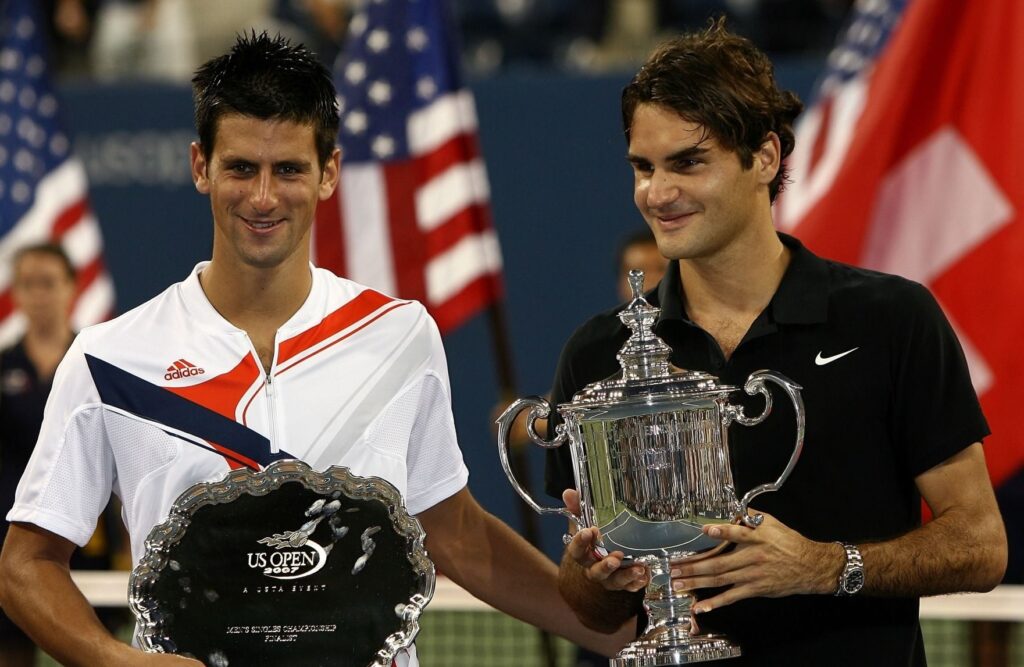
2007 US Open Final
Federer defeated Djokovic:
7–6, 7–6, 6–4.
It was Djokovic’s first Grand Slam final.
He created opportunities in the opening sets but failed to convert crucial set points.
Federer’s experience showed.
The Swiss won his fourth consecutive US Open title.
But Djokovic had demonstrated that he belonged on the biggest stage.
2008 US Open Semifinal
Federer defeated Djokovic:
6–3, 5–7, 7–5, 6–2.
Federer then defeated Andy Murray in the final to win his fifth consecutive US Open championship.
2009 US Open Semifinal
Federer defeated Djokovic again:
7–6, 7–5, 7–5.
The match became famous for one extraordinary point.
Federer hit a between-the-legs passing-shot winner—one of the most replayed shots of his career.
Federer advanced to his sixth consecutive US Open final.
2010 US Open Semifinal: Djokovic Breaks Through
The pattern finally changed.
Djokovic defeated Federer:
5–7, 6–1, 5–7, 6–2, 7–5.
Federer held two match points.
Djokovic saved them.
That fact would become even more remarkable one year later.
Djokovic reached his second US Open final, where Rafael Nadal defeated him.
But the victory over Federer represented an important psychological breakthrough.
2011 US Open Semifinal: Two Match Points Again
One year later, history repeated itself.
Federer led Djokovic two sets to love.
Djokovic fought back.
Federer eventually reached:
5–3, 40–15 in the fifth set.
Two match points.
Djokovic saved the first with a fearless return winner.
He saved the second.
He broke Federer.
And he eventually won:
6–7, 4–6, 6–3, 6–2, 7–5.
Djokovic then defeated Nadal in the final to complete one of the greatest Grand Slam seasons of the Open Era.
The 2010 and 2011 US Open semifinals became central to Djokovic’s reputation for performing under extreme pressure.
Twice Federer reached match point.
Twice Djokovic escaped.
2015 US Open Final
Their final US Open meeting came in the championship match.
Djokovic defeated Federer:
6–4, 5–7, 6–4, 6–4.
Federer entered in excellent form and had not dropped a set during the tournament.
Djokovic absorbed Federer’s attacking pressure and handled a heavily pro-Federer crowd.
The victory gave Djokovic his second US Open championship.
Their final US Open record:
3–3.
Djokovic vs Federer Grand Slam Finals
Djokovic and Federer played five Grand Slam finals.
Djokovic led:
4–1.
| Grand Slam Final | Winner |
|---|---|
| 2007 US Open | Federer |
| 2014 Wimbledon | Djokovic |
| 2015 Wimbledon | Djokovic |
| 2015 US Open | Djokovic |
| 2019 Wimbledon | Djokovic |
This is one of the most important statistics in the rivalry.
Federer won their first Grand Slam final.
Djokovic won the next four.
Three of those four Djokovic victories came at Wimbledon—the tournament most closely associated with Federer.
The Rivalry Changed as Djokovic Changed
The Djokovic who first faced Federer in 2006 was not the Djokovic who faced him in 2011.
And the Djokovic of 2011 was not identical to the player Federer faced in 2015.
Understanding the rivalry requires understanding Djokovic’s development.
The Early Years: Federer Leads
Federer won their first four matches.
He was already one of the greatest players in tennis history.
Djokovic was still developing physically, tactically and mentally.
Federer’s serve, forehand and ability to take time away from opponents created enormous pressure.
But Djokovic improved rapidly.
2008: Djokovic Announces Himself
The 2008 Australian Open semifinal changed perceptions.
Djokovic defeated Federer in straight sets.
Then he won his first Grand Slam title.
The rivalry had become real.
2011: The Balance Changes
Djokovic’s extraordinary 2011 season changed men’s tennis.
His movement improved.
His serve became more reliable.
His return became devastating.
His confidence reached a new level.
Federer remained capable of beating him—as the Roland Garros semifinal proved.
But Djokovic was no longer chasing Federer.
He was competing with him as an equal.
The Later Years: Djokovic Gains the Edge
By the middle of the 2010s, Djokovic increasingly won their biggest matches.
He defeated Federer in:
2014 Wimbledon final
2015 Wimbledon final
2015 US Open final
2019 Wimbledon final
Those victories were critical in shifting the historical balance of their rivalry.
Why Djokovic Troubled Federer
Federer’s attacking game created problems for almost every opponent.
Djokovic possessed several unusual answers.
Djokovic’s Return of Serve
Federer’s serve was one of his greatest weapons.
Against many opponents, it gave him immediate control of points.
Djokovic’s return reduced that advantage.
He could block powerful first serves deep.
He could attack second serves.
He could return from both wings.
And he frequently forced Federer to play an extra shot after serves that would normally produce easy points.
That changed the entire geometry of Federer’s service games.
Djokovic’s Backhand
Djokovic’s two-handed backhand was extraordinarily stable.
Federer could not easily break it down.
Djokovic could defend with it.
Attack with it.
Redirect down the line.
Take the ball early.
And absorb pace.
That reduced the number of obvious patterns Federer could repeatedly exploit.
Djokovic’s Movement
Federer excelled at opening the court.
Djokovic excelled at closing it.
Shots that would be clean winners against most opponents frequently came back.
That forced Federer to hit additional attacking shots.
Every extra shot created another opportunity for Djokovic to reset the rally.
Djokovic’s Passing Shots
Federer’s willingness to attack the net was an important part of his game.
Against Djokovic, approaching carried unusual risk.
Djokovic’s movement and accuracy made him an exceptional passer.
Federer therefore had to choose his net approaches carefully.
Djokovic Under Pressure
The 2010 US Open.
The 2011 US Open.
The 2019 Wimbledon final.
Those matches created one of the defining narratives of their rivalry:
Djokovic’s ability to survive when Federer appeared one point away from victory.
Why Federer Troubled Djokovic
The tactical problem worked both ways.
Federer possessed weapons capable of disrupting Djokovic’s preferred baseline rhythm.
Federer Took Time Away
Djokovic is extraordinarily difficult to defeat when he can establish rhythm.
Federer attempted to prevent that.
He took the ball early.
He attacked short balls.
He changed direction.
He shortened rallies.
That forced Djokovic to react more quickly than he preferred.
Federer’s Serve
Even against one of history’s greatest returners, Federer’s serve remained a major weapon.
His placement and disguise were exceptional.
He could serve wide.
Down the T.
Into the body.
And he frequently followed strong serves with immediate forehand attacks.
Federer’s Variety
Federer could change the nature of a rally instantly.
Topspin.
Slice.
Drop shot.
Net approach.
Serve-and-volley.
Inside-out forehand.
That variety prevented Djokovic from always settling into predictable baseline patterns.
Federer’s Aggression
When Federer was at his best, he could rush Djokovic.
This was particularly effective on faster courts.
Federer’s objective was often simple:
do not allow Djokovic enough time to turn defense into offense.
The SABR and Federer’s Late-Career Aggression
During the later stages of his career, Federer became even more aggressive against Djokovic and other elite returners.
One famous tactic became known as the:
SABR — Sneak Attack By Roger.
Federer would move forward dramatically while returning a second serve, taking the ball extremely early and immediately attacking the net.
The tactic was unconventional.
It was also representative of Federer’s willingness to experiment late in his career.
Against a returner as strong as Djokovic, Federer understood that conventional patterns were not always enough.
He looked for ways to disrupt rhythm.
Djokovic vs Federer at the ATP Finals
The season-ending championship became another important stage in their rivalry.
Both men achieved extraordinary success at the event.
They played several important matches there, including championship encounters.
2012 ATP Finals Final
Djokovic defeated Federer in straight sets.
Both sets were competitive.
Djokovic’s ability to defend and counterattack under pressure proved decisive.
2015 ATP Finals
They played twice during the tournament.
Federer defeated Djokovic in round-robin play.
Djokovic responded in the final.
The Serbian won the championship:
6–3, 6–4.
It became another example of Djokovic’s ability to adjust within the same tournament.
2019 ATP Finals: Their Final Competitive Chapter in London
Federer defeated Djokovic:
6–4, 6–3.
It came only months after the devastating Wimbledon final.
Federer produced an exceptional serving and attacking performance.
The victory eliminated Djokovic from the tournament.
It also became Federer’s final victory over Djokovic.
Their Final Match: 2020 Australian Open
Djokovic and Federer met for the 50th and final time in the 2020 Australian Open semifinal.
Djokovic won:
7–6, 6–4, 6–3.
Federer was physically compromised after his dramatic quarterfinal.
Djokovic advanced to the final and eventually won the tournament.
The rivalry therefore ended with the final score:
Djokovic 27
Federer 23
Their first match had taken place in Monte-Carlo in 2006.
Their final match came in Melbourne in 2020.
Fourteen years separated them.
Djokovic vs Federer: Greatest Matches
Choosing the greatest matches from 50 encounters is difficult.
But several are essential to understanding the rivalry.
1. 2019 Wimbledon Final
Winner: Djokovic
Two Federer championship points.
Nearly five hours.
A 13–12 fifth set.
The longest Wimbledon final ever played.
This is the defining match of the rivalry.
2. 2011 US Open Semifinal
Winner: Djokovic
Federer led two sets to love.
He held two match points.
Djokovic survived.
One fearless return became one of the signature shots of his career.
3. 2014 Wimbledon Final
Winner: Djokovic
Five sets.
Federer fought back dramatically in the fourth.
Djokovic recovered to win the championship.
4. 2011 Roland Garros Semifinal
Winner: Federer
Djokovic entered unbeaten that season.
Federer stopped the streak with one of his finest clay-court performances.
5. 2010 US Open Semifinal
Winner: Djokovic
Federer held two match points.
Djokovic saved both.
The first chapter of a pattern that repeated one year later.
6. 2018 Paris Masters Semifinal
Winner: Djokovic
Djokovic won:
7–6, 5–7, 7–6.
The match lasted more than three hours and contained extraordinary attacking and defensive tennis.
Federer repeatedly pressured Djokovic.
Djokovic survived both tie-breaks.
7. 2015 Wimbledon Final
Winner: Djokovic
Federer entered after an exceptional semifinal.
Djokovic still found the solution.
8. 2008 Australian Open Semifinal
Winner: Djokovic
The breakthrough.
Djokovic ended Federer’s streak of 10 consecutive Grand Slam finals and went on to win his first major.
9. 2015 US Open Final
Winner: Djokovic
Djokovic overcame Federer and a heavily partisan New York crowd to win another major.
10. 2012 Wimbledon Semifinal
Winner: Federer
Federer’s only Wimbledon victory over Djokovic.
He went on to capture his seventh title and return to World No. 1.
Djokovic vs Federer Career Statistics
Head-to-head results measure direct competition.
Career statistics measure what each player accomplished against the entire tour.
| Career Achievement | Novak Djokovic | Roger Federer |
|---|---|---|
| Grand Slam Singles Titles | 24 | 20 |
| Australian Open Titles | 10 | 6 |
| Roland Garros Titles | 3 | 1 |
| Wimbledon Titles | 7 | 8 |
| US Open Titles | 4 | 5 |
| Weeks at World No. 1 | 428 | 310 |
| Year-End No. 1 Finishes | 8 | 5 |
| Masters 1000 Titles | 40 | 28 |
| ATP Finals Titles | 7 | 6 |
| Career Grand Slam | Yes | Yes |
| Career Golden Masters | Yes | No |
| Olympic Singles Gold | Yes | No |
| Olympic Doubles Gold | No | Yes |
The table demonstrates why their rivalry occupies such an important place in the GOAT debate.
Federer established many of the standards Djokovic later chased.
Djokovic eventually surpassed several of them.
Djokovic vs Federer Grand Slam Comparison
Novak Djokovic
24 Grand Slam singles titles
- Australian Open: 10
- Roland Garros: 3
- Wimbledon: 7
- US Open: 4
Roger Federer
20 Grand Slam singles titles
- Australian Open: 6
- Roland Garros: 1
- Wimbledon: 8
- US Open: 5
Djokovic leads the total:
24–20.
Federer retains the advantage at Wimbledon and the US Open.
Djokovic leads at the Australian Open and Roland Garros.
Both completed the Career Grand Slam.
Djokovic vs Federer: Who Was Better on Hard Courts?
This is closer than many people assume.
Their direct hard-court head-to-head:
Djokovic 20–18 Federer.
Both were historically great hard-court players.
Federer dominated the surface during the mid-2000s.
Djokovic became extraordinarily successful in Melbourne and across Masters 1000 hard-court tournaments.
Djokovic has the stronger overall statistical case.
But their direct rivalry shows how closely matched they were.
Djokovic vs Federer: Who Was Better on Clay?
Their direct clay head-to-head finished:
4–4.
Djokovic eventually won more Roland Garros titles.
Federer reached more Roland Garros finals.
Both completed the Career Grand Slam.
Neither man’s historical identity is primarily based on clay.
Djokovic has the stronger title résumé at Roland Garros, but their direct clay rivalry could not have been more even.
Djokovic vs Federer: Who Was Better on Grass?
This comparison is fascinating.
Federer won:
8 Wimbledon titles.
Djokovic won:
7 Wimbledon titles.
Federer therefore holds the tournament record between the two.
But in direct grass competition:
Djokovic led 3–1.
And Djokovic defeated Federer in three Wimbledon finals.
So there are two legitimate conclusions:
Federer achieved more at Wimbledon across his complete career.
Djokovic won more when they directly faced each other there.
Both facts matter.
Djokovic vs Federer: Who Was Better at the Grand Slams?
Djokovic finished with more Grand Slam titles:
24–20.
He also led their direct Grand Slam head-to-head:
11–6.
And their Grand Slam final record:
4–1.
Those numbers give Djokovic a substantial statistical advantage in this category.
Federer’s case includes his earlier period of extraordinary dominance, his eight Wimbledon titles and his run of consecutive Grand Slam finals and semifinals.
But by the major totals and direct major rivalry, Djokovic finished ahead.
Djokovic vs Federer: Who Was Better at World No. 1?
Djokovic.
Federer spent 310 weeks at World No. 1.
For years, that was the men’s record.
Djokovic eventually surpassed it and reached 428 weeks.
Djokovic also finished more seasons as year-end No. 1.
Federer’s ranking achievements remain historic.
Djokovic ultimately went further.
Djokovic vs Federer: Who Had the Better Peak?
This is much more difficult.
Federer’s 2004–2007 period represents one of the greatest sustained peaks in tennis history.
Across those four seasons, Federer won 11 Grand Slam titles.
He spent an extraordinary 237 consecutive weeks at World No. 1.
Djokovic’s 2011 season was one of the greatest individual seasons ever played.
His 2015–2016 run was equally historic.
From Wimbledon 2015 through Roland Garros 2016, Djokovic won four consecutive majors and held all four Grand Slam titles simultaneously.
If peak means uninterrupted multi-year domination, Federer has an extraordinary case.
If peak means achievement across every major simultaneously and against the Big Three generation, Djokovic has an extraordinary case.
This is one category where reasonable observers can disagree.
Djokovic vs Federer: Who Had Greater Longevity?
Both men redefined tennis longevity.
Federer won his first Grand Slam in 2003 and his final one in 2018.
Djokovic won his first major in 2008 and continued competing for Grand Slam championships well into his late 30s.
Federer became the oldest ATP World No. 1 in men’s tennis history in 2018.
Djokovic later broke multiple age-related records of his own and continued extending his major-match record.
Both demonstrated that elite tennis careers could last much longer than previous generations often assumed.
Djokovic vs Federer Playing Style Comparison
| Attribute | Novak Djokovic | Roger Federer |
|---|---|---|
| Dominant Hand | Right | Right |
| Backhand | Two-handed | One-handed |
| Primary Strength | Return, movement & precision | Serve, forehand & attacking variety |
| Best Surface | Hard | Grass |
| Return of Serve | Historic strength | Strong |
| Serve | Excellent | Major weapon |
| Forehand | Elite | Signature weapon |
| Backhand | Signature weapon | Attacking variety |
| Defense | Exceptional | Strong |
| Net Play | Excellent | Exceptional |
| Movement | Exceptional | Exceptional |
| Tactical Adaptability | Exceptional | Exceptional |
| Preferred Pattern | Baseline control | First-strike attack |
Their styles were almost perfect opposites.
Federer wanted to take time away.
Djokovic wanted to make the opponent play another ball.
Federer disrupted rhythm.
Djokovic absorbed pressure.
That contrast helped make their rivalry so compelling.
The Rivalry in Five Numbers
If you wanted to summarize Djokovic vs Federer using five numbers:
27–23
Djokovic’s final overall advantage.
20–18
Djokovic’s narrow hard-court advantage.
4–4
Their perfectly balanced clay rivalry.
3–1
Djokovic’s grass head-to-head advantage.
11–6
Djokovic’s Grand Slam head-to-head advantage.
Together, those numbers tell the basic statistical story.
But they cannot capture the drama of the matches themselves.
Who Won the Djokovic vs Federer Rivalry?
If the question is simply:
Who won more matches?
Novak Djokovic.
27–23.
But we can break the comparison down further.
Overall head-to-head: Djokovic
Hard courts: Djokovic
Clay: Tie
Grass head-to-head: Djokovic
Grand Slam head-to-head: Djokovic
Grand Slam finals: Djokovic
Total Grand Slam titles: Djokovic
Weeks at World No. 1: Djokovic
Masters 1000 titles: Djokovic
ATP Finals titles: Djokovic
Wimbledon titles: Federer
US Open titles: Federer
Overall career singles titles: Federer
Federer has important historical advantages.
But across many of the statistical categories most frequently used in modern GOAT comparisons, Djokovic ultimately finished ahead.
Did the Age Difference Matter?
This is essential context.
Federer was born in 1981.
Djokovic was born in 1987.
Nearly six years separated them.
When they first met in 2006:
Federer was World No. 1 and already a multiple Grand Slam champion.
Djokovic was 18 and still looking for his first ATP title.
When Djokovic reached his physical and competitive prime, Federer was already entering the later stages of his peak years.
But the age difference cuts both ways.
Early in the rivalry, Federer faced an inexperienced Djokovic.
Later in the rivalry, Djokovic faced an older Federer.
That is why simply using 27–23 as proof of every historical argument would be too simplistic.
Context matters.
Djokovic vs Federer and the GOAT Debate
The rivalry became deeply connected to the larger GOAT discussion.
Federer established the benchmark.
He reached 20 Grand Slam titles.
He held the men’s record for weeks at World No. 1.
He won eight Wimbledon championships.
He accumulated 103 tour-level singles titles.
He transformed expectations for sustained excellence.
Then Djokovic began breaking those benchmarks.
Djokovic eventually surpassed Federer in:
- Grand Slam titles
- Weeks at World No. 1
- Year-end No. 1 finishes
- Masters 1000 titles
- ATP Finals titles
- Grand Slam match victories
- Direct head-to-head
- Grand Slam head-to-head
Djokovic also completed the Career Golden Masters and won Olympic singles gold.
Federer’s historical case, however, extends beyond categories in which he remains statistically No. 1.
His dominance helped define an era.
His playing style influenced generations.
His popularity expanded tennis’s global audience.
And his eight Wimbledon championships remain one of the iconic records in men’s tennis.
How much should statistics matter?
How much should peak dominance matter?
How much should direct competition matter?
How much should influence matter?
Those questions are central to any serious GOAT analysis.
Read our complete guide to how the greatest tennis player of all time is determined for the framework behind these comparisons.
Djokovic, Federer and Nadal: The Big Three
The Djokovic–Federer rivalry is only one side of the Big Three triangle.
Rafael Nadal created a completely different tactical challenge for both men.
The three rivalries finished:
Djokovic vs Federer: Djokovic 27–23
Djokovic vs Nadal: Djokovic 31–29
Nadal vs Federer: Nadal 24–16
Together, those rivalries produced hundreds of high-level matches and dozens of major encounters.
Their final Grand Slam totals became:
Djokovic — 24
Nadal — 22
Federer — 20
But reducing the Big Three to those numbers alone misses much of what made the era extraordinary.
They forced each other to improve.
Federer pushed Nadal.
Nadal challenged Federer.
Djokovic found solutions to both.
Then Federer adapted to Djokovic.
Nadal adapted to Djokovic.
And the cycle continued.
For the other two complete rivalry analyses, explore:
Rafael Nadal vs Roger Federer: Complete Head-to-Head
Novak Djokovic vs Rafael Nadal: Complete Head-to-Head
Djokovic vs Federer Frequently Asked Questions
What was the final Djokovic vs Federer head-to-head record?
Novak Djokovic finished with a 27–23 advantage over Roger Federer.
How many times did Djokovic and Federer play?
They played 50 official tour-level matches.
Who won more matches, Djokovic or Federer?
Djokovic won 27.
Federer won 23.
What was Djokovic vs Federer on hard courts?
Djokovic led Federer 20–18 on hard courts.
What was Djokovic vs Federer on clay?
Their clay-court head-to-head finished 4–4.
What was Djokovic vs Federer on grass?
Djokovic led Federer 3–1 on grass.
All four grass-court meetings came at Wimbledon.
What was Djokovic vs Federer in Grand Slam matches?
Djokovic led their Grand Slam head-to-head 11–6.
How many Grand Slam finals did Djokovic and Federer play?
They played five Grand Slam finals.
Djokovic won four.
Federer won one.
What was Djokovic vs Federer at the Australian Open?
Djokovic led 4–1.
What was Djokovic vs Federer at Roland Garros?
Their Roland Garros record finished 1–1.
What was Djokovic vs Federer at Wimbledon?
Djokovic led 3–1.
What was Djokovic vs Federer at the US Open?
Their US Open head-to-head finished 3–3.
How many Wimbledon finals did Djokovic and Federer play?
They played three Wimbledon finals:
2014, 2015 and 2019.
Djokovic won all three.
Who won the 2019 Wimbledon final?
Novak Djokovic defeated Roger Federer:
7–6, 1–6, 7–6, 4–6, 13–12.
Federer held two championship points in the fifth set.
How long was the 2019 Wimbledon final?
The match lasted 4 hours and 57 minutes.
It became the longest Wimbledon final in history.
Did Federer have match points against Djokovic at Wimbledon 2019?
Yes.
Federer held two consecutive championship points at 8–7, 40–15 in the fifth set.
Djokovic saved both and eventually won.
Did Federer have match points against Djokovic at the US Open?
Yes.
Federer held two match points in both their 2010 and 2011 US Open semifinals.
Djokovic won both matches.
Who won their first match?
Federer.
Their first meeting came at Monte-Carlo in 2006.
Federer defeated the 18-year-old Djokovic in three sets.
Who won their final match?
Djokovic.
Their 50th and final meeting came in the 2020 Australian Open semifinal.
Djokovic won in straight sets.
Who won more Grand Slam titles?
Djokovic won 24 Grand Slam singles titles.
Federer won 20.
Who won more Wimbledon titles?
Federer.
Federer won Wimbledon eight times.
Djokovic won it seven times.
Who spent more weeks at World No. 1?
Djokovic.
Djokovic spent 428 weeks at World No. 1.
Federer spent 310.
Who won more Masters 1000 titles?
Djokovic won 40.
Federer won 28.
Who won more ATP Finals titles?
Djokovic won seven.
Federer won six.
Who won more career singles titles?
Federer finished with 103 tour-level singles titles.
Djokovic’s career totals should be evaluated using the latest official ATP statistics because his career continued after Federer’s retirement.
Who was better, Djokovic or Federer?
There is no official answer to that question.
Djokovic leads their direct head-to-head, Grand Slam head-to-head and several major career statistical categories.
Federer won more Wimbledon titles, more US Open titles and more overall tour-level singles titles than Djokovic had accumulated through much of their shared era, while also producing one of the greatest periods of sustained dominance in tennis history.
The answer ultimately depends on how different achievements are weighted in the GOAT debate.
To see how both players compare with Rafael Nadal across Grand Slams, rankings, surfaces and other major achievements, explore our complete Djokovic vs Federer vs Nadal comparison.
Vote: Djokovic or Federer?
Fifty matches gave us the direct competitive result:
Djokovic 27–23 Federer.
But does that automatically make Djokovic the greater player?
Or should Federer’s peak dominance, Wimbledon record, style, influence and historical impact carry additional weight?
That decision belongs to tennis fans.
VIEW THE LIVE TENNIS GOAT RANKING
The GOATofTennis.net ranking is determined by fan votes—not by our editorial team.
Explore the Complete Player Profiles
Novak Djokovic: Career Statistics, Records, Achievements & Biography
Explore Djokovic’s Grand Slam championships, World No. 1 records, Masters achievements, Olympic gold and complete career.
Roger Federer: Career Statistics, Records, Achievements & Biography
Explore Federer’s 20 Grand Slam championships, eight Wimbledon titles, ranking achievements and complete career.
Rafael Nadal: Career Statistics, Records, Achievements & Biography
Explore Nadal’s 22 Grand Slam championships, 14 Roland Garros titles and historic clay-court dominance.
Continue Exploring the Big Three Rivalries
Novak Djokovic vs Rafael Nadal: Head-to-Head, Stats, Records & Complete Rivalry
Explore all 60 matches in the most-played rivalry of the modern men’s game.
Rafael Nadal vs Roger Federer: Head-to-Head, Stats, Records & Complete Rivalry
Explore the complete 40-match Federer–Nadal rivalry, including their legendary Wimbledon battles.
Continue the Tennis GOAT Debate
The Greatest Tennis Player of All Time
Compare Djokovic, Federer, Nadal and other legends across Grand Slams, rankings, surfaces, longevity and historical impact.
Tennis GOAT Ranking – Live Fan Vote
See how tennis fans currently rank the greatest players and cast your vote.
How Is the Greatest Tennis Player of All Time Determined?
Explore the criteria behind serious GOAT comparisons, including Grand Slam championships, rankings, peak performance, longevity, versatility and direct competition.
Editorial Methodology
GOATofTennis.net separates statistical fact, historical analysis and fan opinion.
The Djokovic–Federer rivalry is complete because Roger Federer retired from professional tennis in 2022.
Their final official head-to-head record is:
Djokovic 27–23 Federer.
Their rivalry statistics measure direct competition between the two players.
Career statistics measure something different: performance against the entire professional field.
Grand Slam championships measure success at tennis’s four biggest tournaments.
World No. 1 rankings measure sustained performance across the tour.
Surface records reveal adaptability and specialization.
Direct head-to-head records show how two particular players matched up against each other.
Historical influence measures something that cannot be represented completely by a numerical table.
No single category automatically determines greatness.
Context matters.
Editorial Conclusion
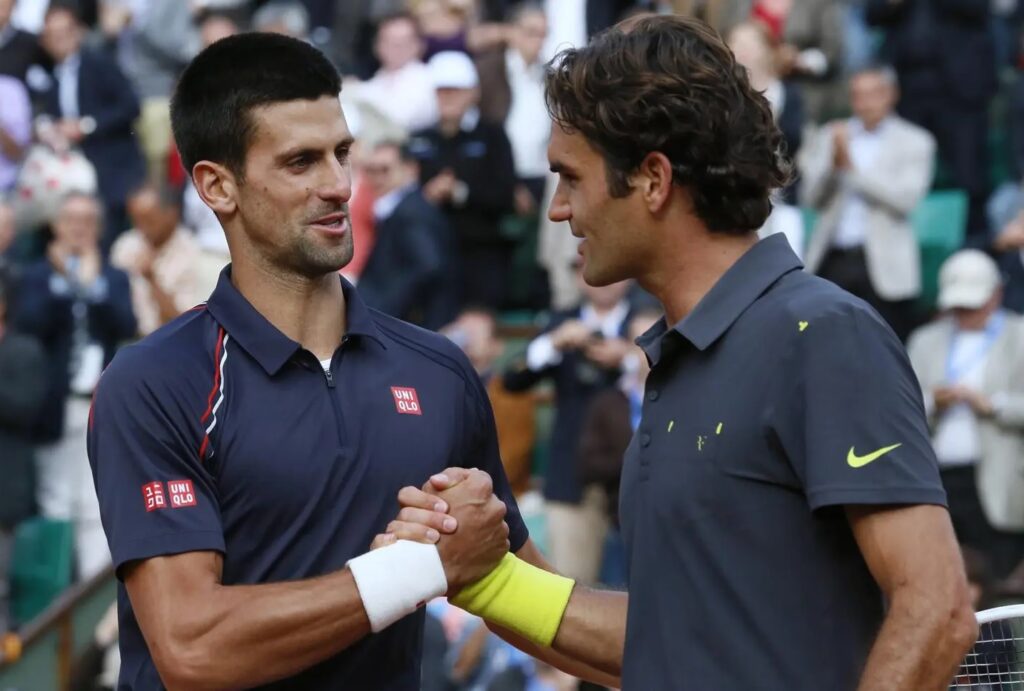
It began in Monte-Carlo in 2006.
Roger Federer was World No. 1.
Novak Djokovic was an 18-year-old ranked outside the Top 50.
Fourteen years later, they met for the 50th and final time at the Australian Open.
By then, the young challenger had become one of Federer’s greatest rivals.
The final score:
Djokovic 27–23 Federer.
But those four numbers barely begin to describe what happened between them.
Federer stopped Djokovic’s extraordinary winning streak at Roland Garros in 2011.
Djokovic survived Federer’s match points at the US Open in 2010.
Then he did it again in 2011.
They played three Wimbledon finals.
Djokovic won all three.
In the last one, Federer stood one point away from history.
Twice.
Djokovic survived again.
Their rivalry connected two periods of men’s tennis:
the era Federer initially dominated and the era Djokovic eventually came to dominate.
Federer forced Djokovic to solve attacking tennis at its highest level.
Djokovic forced Federer to adapt to unprecedented returning, movement and defensive precision.
They made each other’s path harder.
And in doing so, they made their achievements more meaningful.
Novak Djokovic vs Roger Federer was not simply a rivalry between two champions.
It was one of the battles that defined the greatest era in modern men’s tennis.
Tags: Clay, Djokovic, Federer, Grass, Hard, Head 2 Head, Matches, Novak, Roger, Wins